Yes, ChatGPT Can Build Your Website. Here's the Rest of the Year.
In OpenAI's ad, a potter builds her website and checkout by talking to ChatGPT. It can do that. Here's what the ad leaves out, and what the year after launch looks like.
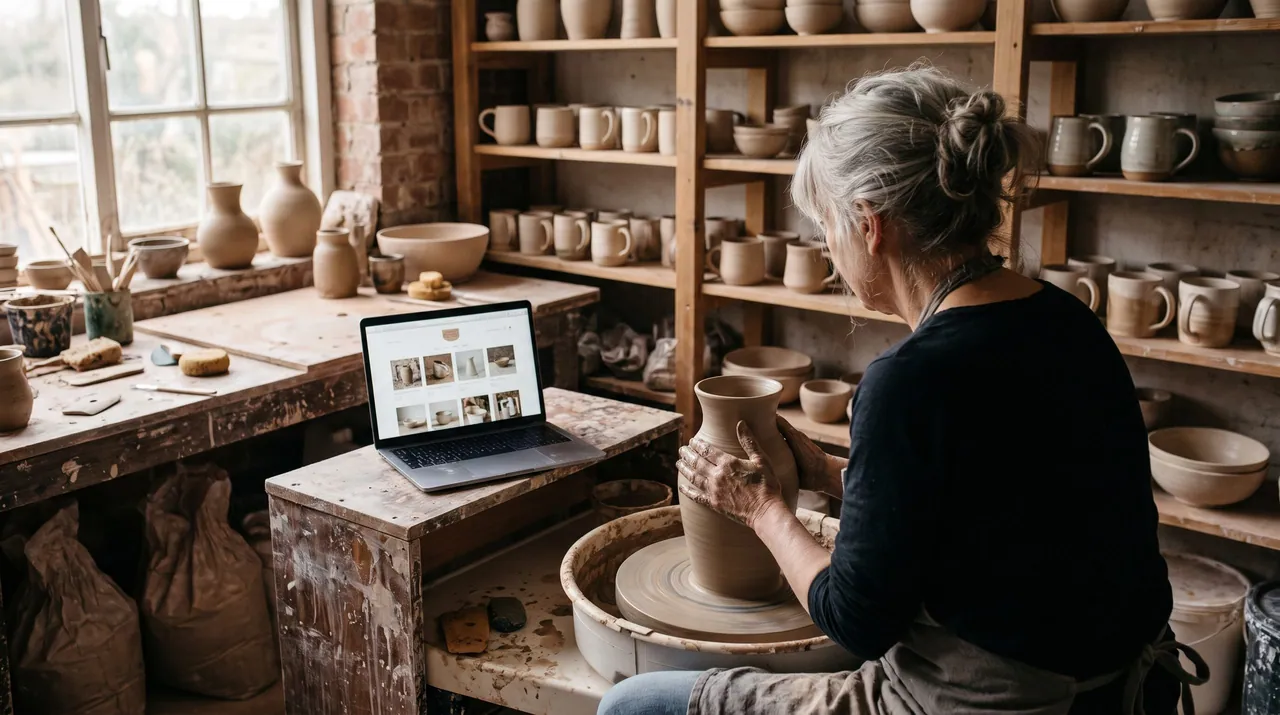
This fall OpenAI ran an ad for ChatGPT Voice starring a group of grandmothers. In one scene, a woman throwing a vase on her wheel asks ChatGPT to build her a website. A pottery site appears on her laptop. She asks for a checkout page, and later asks whether anyone has bought anything yet.
Not long after I saw it, someone asked me what that means for a business like mine, since websites are part of what I sell.
Here's my honest answer. She can do it. ChatGPT and tools like it can make a good-looking website, and what they make isn't far from what I make. I build with AI every day. If you made a site that way and you like it, good. I'm happy to start from it.
What the ad leaves out
The ad shows the easy afternoon. It doesn't show the decisions that come after, and the moment she asks for a checkout page, those decisions start to matter.
A site that only says who you are and how to reach you has little to protect. A site that takes payments, stores customers' names and addresses, or has a login is different. Somebody has to decide where that data lives, who can read it, what happens when a payment message arrives twice, and how the site holds up if someone floods it with traffic on purpose. The AI will answer any of those questions well. It won't raise them on its own, and asking the same AI that wrote the code whether the code is safe doesn't count for much.
This has already gone wrong for real owners. In 2025, about 170 apps built with one popular AI builder were found letting anyone read their data without logging in. I wrote about that, and about what the builders' own terms say about who is responsible, in You Can Build Your Own Website With AI. Read the Fine Print First.
None of that means she shouldn't build it. It means the website is the start of the job, not the whole of it. So let's imagine her a year from now.
Month one: where does it live?
The site exists in a chat window. To be on the internet it needs a home: hosting, a domain, and an email address on that domain. There are dozens of providers, each with its own plans and fine print, and the cheap one and the right one aren't always the same. She can ask ChatGPT to walk her through it, and it will. It takes a Saturday, and she ends up with three new accounts and three new bills.
For my clients, I pick and run the hosting and set up the domain and the form email. There's nothing for them to compare or sign up for.
Month three: the form goes quiet
Her contact form stops sending her messages. Nothing on the site looks broken. People fill it in, see a thank-you note, and the message goes nowhere. She finds out a few weeks later, when a customer at a craft fair mentions they wrote and never heard back.
The fine print post covers why this happens. The part that matters here is who notices. On her own, it's her, weeks later. On the sites I run, every message also lands in the client's dashboard, so a lead doesn't depend on one email getting through.
Month six: two lists that never match
Sales pick up. She sells at craft fairs with a card reader and online through her new checkout, and the stock count in each place never agrees. She sells a vase online on Tuesday that went home with someone on Saturday. Then she copies every shipping address into the shipping site by hand, one order at a time.
This is where most of my work actually is. The website is the small part. Joining the register, the online store and the shipping so that an order in one place updates the others is the kind of work that gives an owner her evenings back. For a family ham business in Fairfield, I built online ordering that pulls live FedEx rates at checkout.
None of that is hard to describe to an AI. Knowing that it's the thing to ask for, and knowing what breaks when two systems disagree, comes from having done it.
November: the rush
A local gift guide mentions her shop. On Black Friday her site gets more visitors in an hour than it usually sees in a month. Cheap hosting plans are often sized for the usual month. If the site slows to a crawl, it does it on the best day of her year, and the person who has to work out why is her, from behind a full booth.
The sites I build are served from a network made for that kind of spike, and if something does go wrong, my clients call or text me. I already know their site, so nobody starts from scratch.
Month twelve: did it work?
A year in, she wants to know which searches found her, which pages people read, and whether anyone from the gift guide came back. That's in Google Analytics and Search Console, which means two more accounts to set up and two more tools to learn.
Then there's AI search. More people now ask an assistant where to buy handmade pottery near them instead of scrolling through search results. Whether her shop comes up depends partly on how her site is built for those assistants to read. I wrote about that in Why Good SEO Alone Won't Get Your Business Recommended by AI.
My clients sign in to one dashboard that shows their visits, searches and leads in plain words.
So why hire me?
Not for the look. AI can get you a good look. The reason to hire me, or someone like me, is if you'd rather spend the year running your business, and you'd like someone who knows which questions to ask before a checkout page goes live. I've built software for 20 years. I pick the hosting, notice when the form goes quiet, join your systems together, and pick up the phone on your busiest day.
If you've already made a site with AI and you like it, keep the look. I'll rebuild it underneath, host it and look after it. Here's how that works.
And if you'd rather run it yourself, that's a fair choice too. The fine print post is a good place to start.
Questions people ask
Can ChatGPT build a website for my business?
Yes. ChatGPT and similar tools can make a good-looking website from a conversation. The work that's left is everything after: hosting, the contact form, staying up on a busy day, connecting the site to your other systems, and fixing it when something breaks.
If ChatGPT can build a website, why hire someone?
Not for the look. Hire someone if you'd rather spend your time running the business than running the website: picking the hosting, noticing when a form stops sending, joining your register and shipping to the site, and having someone to call on your busiest day.
Can I bring a website I made with AI to a developer?
With me, yes. The design stays as you made it, and I rebuild what's underneath on code I test, then host it and look after it.
Related services
Written by Nathan Wallman. How I use AI on this blog.