Why I Started Wallman Solutions
AI is moving fast enough that I needed my own place to build with it, and the speedup finally made the side projects friends and family kept asking about worth taking on. Those two things are why this company exists.
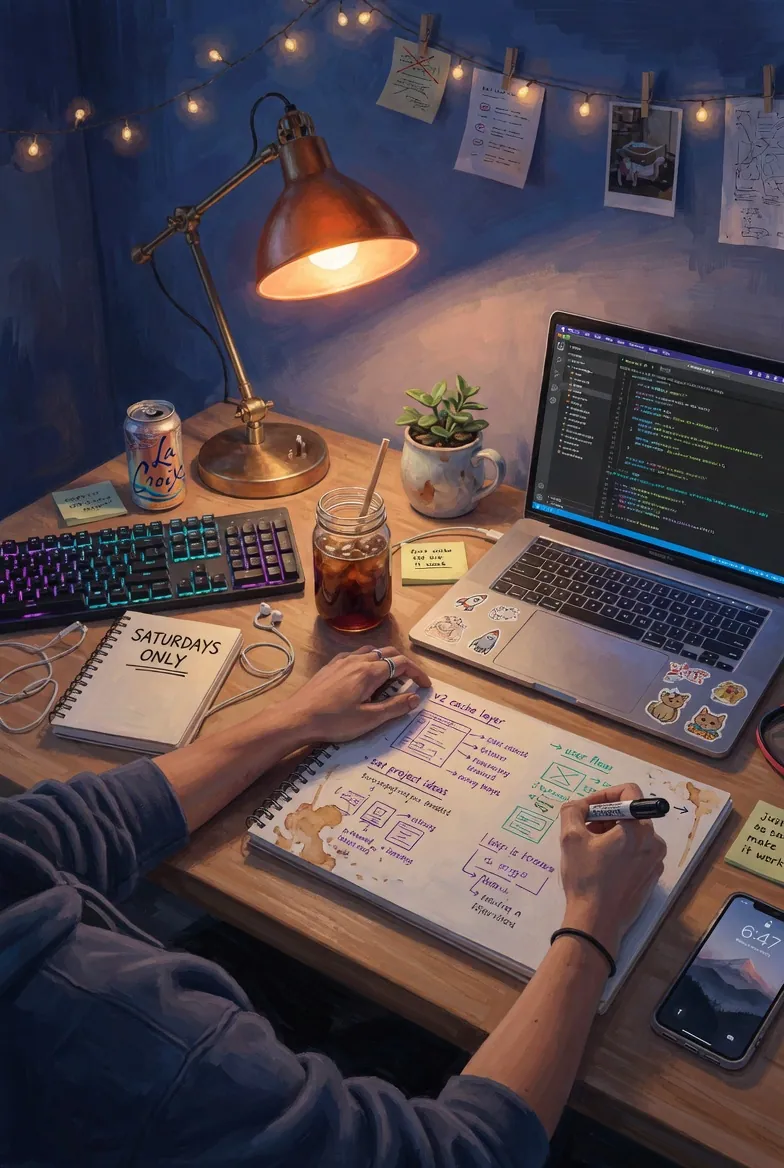
Two things changed for me at about the same time, and that's pretty much why this company exists.
For most of my career, when a friend or family member came to me with a software idea, my answer was the kind of soft "yeah, maybe someday" that everyone knew really meant no. A real custom build is a hundred hours of unglamorous work (auth, hosting, deploys, edge cases, the boring 80 percent), and a hundred free hours wasn't something I had to give. So the asks piled up. I wanted to help every time, but the math wasn't there, and nothing got built.
That started to change in early February, when the latest round of models hit. Two pretty different things shifted at once.
I needed somewhere to actually use this stuff
The pace of AI right now is the fastest I've ever watched a technology move, and I've been doing this long enough to have seen a few inflection points. What's possible changes week to week as new models and tools come out. You can read about all of it and still not really know how it works. The only way I've ever learned a new technology is by building something with it.
The catch is that my day job, like a lot of jobs in regulated or risk-averse industries, has real limits on where and how AI can be used. There are good reasons for those limits and I'm not complaining about them. It does mean the slice of AI I get to touch at work is small. If the rest of my exposure comes from reading what other people write about it, I'll always be a year behind whoever's shipping.
So I needed somewhere of my own, where I could take an idea all the way through: pick the model, wire it up, deploy it, watch it break, fix it, do it again. Side projects do that better than anything else I've found.
And the math finally adds up
For my whole career, the productivity ceiling on one engineer working alone was basically fixed. Experience, better tooling, and the occasional focused weekend all helped a little, but the curve was gentle. The hours a real custom build needed cost more than I had to give.
AI tools have started to break that ceiling. In a 2022 experiment by GitHub, developers using Copilot finished a coding task about 55% faster than developers without it.
The research isn't one-sided, and I don't want to pretend it is. In a careful 2025 study, the research group METR found that 16 experienced open-source developers were about 19% slower when they used early-2025 AI tools on their own projects, even though they expected to be faster. I take that seriously. Those were large, mature codebases the developers already knew well, which is the hardest case for these tools, and the tools have changed a lot since. Still, "AI makes you faster" clearly isn't true for everyone on every codebase.
What I can tell you is what I've seen myself. The models that arrived in early 2026 changed things noticeably on the kind of work I do on Saturdays.
New projects from scratch, full-stack, solo, with my tooling dialed in and no legacy code in the way. That's where these tools do best. I'm a heavy user of them and I've put a lot of unpaid hours into learning to drive them. My own rough estimate, from my own projects and not from any study, is that I'm working 3-4x faster, sometimes more on a project that fits the tools well. A weekend now does what a two-week sprint used to.
For me the speedup is real, but it multiplies whatever you bring to it. A 3-4x boost on top of twenty years of production engineering experience looks like real software shipped in a weekend. Give the same boost to a developer who doesn't already know what to build, how to structure it, or how to keep the model on the rails, and you get bad code faster.
So by my estimate, the project that used to take me a hundred hours takes about twenty-five. When a friend asks for a small custom tool now, I can give them a real deliverable on a real timeline at a price that makes sense for both of us, where before it was a six-month favor I'd politely decline.
Why a company, and not just a hobby
I thought for a while about just keeping this as favors and never putting a name on any of it. Two things eventually changed my mind.
One was that the asks kept coming. Friends tell their friends, and "I know a guy" travels fast in small business circles. Without a real name and process behind the work, every project ends up being its own one-off scramble. With one, I can take on more without losing track of things in my inbox.
The other was that writing the code is rarely the hard part. People need it scoped fairly, hosted somewhere it isn't going to disappear, and maintained by someone they can call. That last part is rarer than you'd expect. Plenty of freelancers will build you a thing and walk away. The site goes live, the contract closes, and six months later when the database fills up you're calling someone new who has to start from scratch.
Wallman Solutions is built to be the opposite of that: custom software development in Omaha where every project is built, hosted, and maintained by me, the same person who scoped it. AI is what makes it possible for one engineer to cover that much ground. I think it's worth doing because most small businesses are well served by one competent person who picks up the phone, and a whole team would be more than they need.
If I told you "eventually"
If you're someone I've told "yeah, eventually" in the last few years, the answer's different now. Send me what you were thinking about. There's a good chance I can build it now.
If you're running a small business with a process held together by spreadsheets, Don't Automate a Broken Process is a good place to start. If you have an AI-built prototype that looked great in a demo and is starting to fall apart, read The Demo Always Works. That's the Problem. Either way, that's the same kind of work, and I'd like to hear about it.
There's more about me, my background, and how I use AI on my author page.
— Nathan
Questions people ask
Why did Nathan Wallman start Wallman Solutions?
Two things changed at about the same time. He needed a place of his own to build with AI, because his day job limits where it can be used. And AI tools cut the hours a custom build takes, which made the projects friends and family kept asking about worth taking on.
How much faster does AI make software development?
It depends on who is using it and on what. A 2022 GitHub experiment found developers finished a coding task about 55% faster with Copilot. A 2025 METR study found 16 experienced open-source developers were about 19% slower on their own projects. Nathan's own rough estimate, on new solo projects, is 3 to 4 times faster.
Who builds and maintains a Wallman Solutions project?
Nathan does. Every project is built, hosted and maintained by the same person who scoped it.
Related services
Written by Nathan Wallman. How I use AI on this blog.